
How Can a Criminal Lawyer in Adana Help You?
A criminal lawyer in Adana, registered with the Adana Bar Association and specializing in criminal law, supports you across a wide range of criminal matters: challenging pretrial detention (tutuklama) ordered by a judge, identifying unlawfully obtained evidence and using options such as effective remorse (etkin pişmanlık) and reconciliation (uzlaşma).
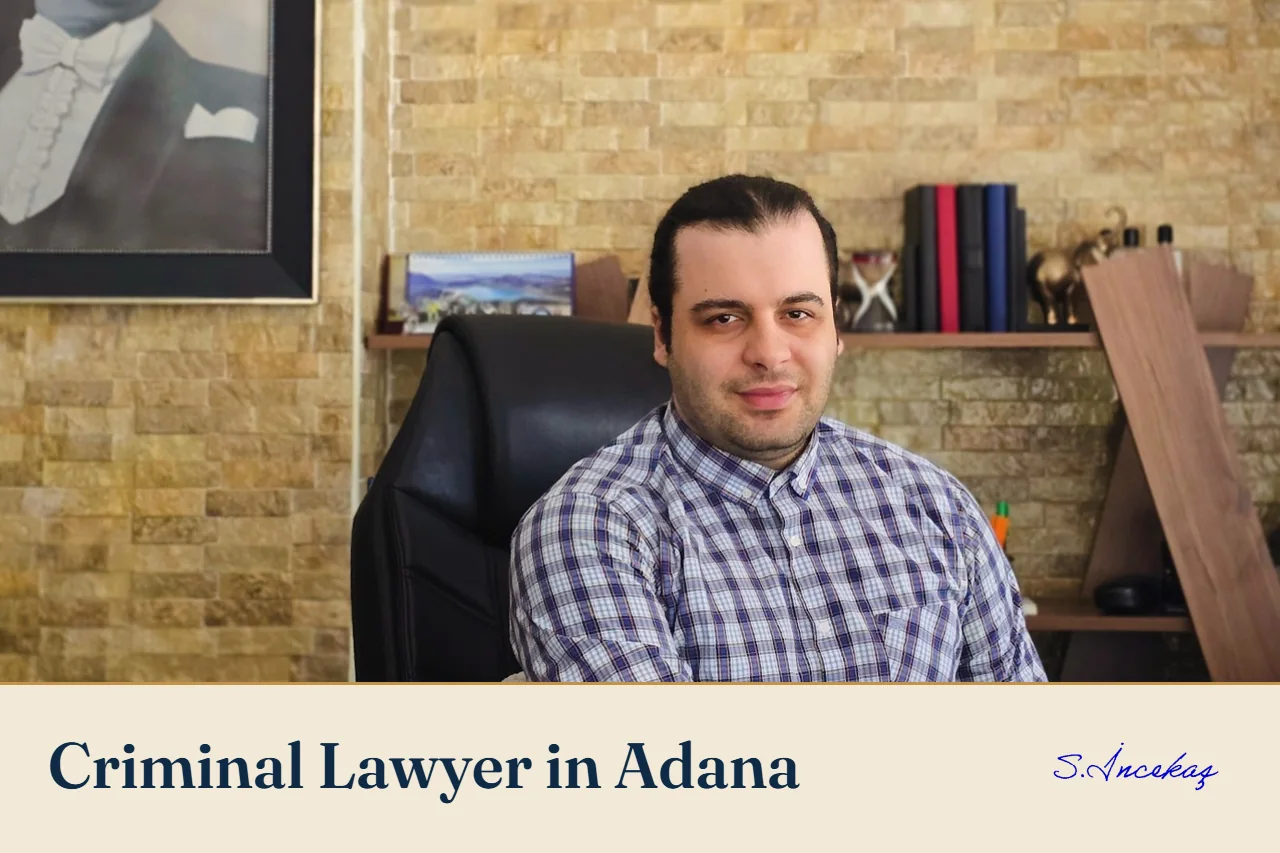
Suppose a late-night call tells you that a relative has been taken into police custody, or you are summoned to give a statement. The right steps, taken in time, can directly affect the outcome.
A criminal case can lead to severe penalties, so choose your lawyer with care. The best criminal lawyer in Adana is competent and experienced, particularly in High Criminal Court (ağır ceza mahkemesi) cases and investigations by the public prosecutor. A seasoned criminal defense lawyer who communicates well, is available 24/7 during police custody and questioning by a judge and has a firm command of the Code of Criminal Procedure (CMK, Law No. 5271) is your most valuable guide in the justice system.
Criminal lawyers in Adana handle cases involving offenses under the Turkish Penal Code (TCK, Law No. 5237), including:
- Offenses against property, such as theft, fraud and robbery.
- Offenses against persons, such as intentional or negligent injury, torment, torture and killing.
- Drug trafficking and drug use.
- Offenses against sexual integrity.
- Insult, threats and false accusation.
- Traffic offenses, including the offense of driving under the influence of alcohol or drugs (DUI), and causing injury or death by negligence.
- Offenses against public trust, such as forgery.
- Cybercrime, such as unlawful access to an information system and misuse of bank or credit cards.
Driving under the influence is not always a crime. Above 0.50 per mille (‰), a private car driver faces an administrative fine and license suspension even if the act is also a crime; the limit is lower for drivers of other vehicles. Above 1.00 per mille, TCK Article 179(3) also applies (Highway Traffic Act (KTK, Law No. 2918), Article 48). Article 179(3) itself makes it a crime to drive when alcohol, drugs or another cause makes safe driving impossible.
Whatever the charge, the right to the assistance of defense counsel is an inseparable part of the defense in criminal proceedings and an element of the right to a fair trial, as the Turkish Court of Cassation (Yargıtay) has held (Court of Cassation, 3rd Criminal Chamber, decision of 16 June 2025, E.2022/26289, K.2025/17809).
What Should You Look for When Choosing a Criminal Lawyer in Adana?
When choosing a criminal lawyer in Adana, look for expertise and experience, clear communication, transparent fees, professional reputation and command of criminal procedure. The right choice directly affects the success of your case.
- Expertise: ask about years of criminal practice and success in similar cases; only active practitioners keep pace with ever-changing legislation.
- Communication: regular updates, plain explanations and timely answers ease anxiety and involve you in your defense.
- Fees: a reliable lawyer explains the fee structure and extra costs up front.
- Reputation: verify Adana Bar Association registration, then weigh online reviews and former clients’ recommendations.
- Procedure: ask how the lawyer uses the Code of Criminal Procedure (CMK) and current case law to protect your rights.
Procedural skill matters because Article 36 of the Constitution of the Republic of Turkey guarantees the right to present claims and a defense before the courts and to a fair trial.
What Does a Criminal Lawyer Do at Each Stage of a Case?
A criminal lawyer in Adana provides comprehensive support from the investigation until the judgment becomes final, and the tasks change from stage to stage.
What Does a Lawyer Do During the Investigation?
During the investigation, your lawyer:
- Accompanies you when you give your statement to the police or prosecutor.
- Protects your legal rights in police custody.
- Monitors how evidence is gathered and assessed.
- Files objections (itiraz) to measures such as pretrial detention ordered by a judge and judicial control.
Under Article 149(1) of the Code of Criminal Procedure (CMK), a suspect or defendant may be assisted by one or more defense counsel at every stage of the investigation and the trial, so as a rule you can have a lawyer’s help in police custody too. Up to three lawyers may be present when a statement is taken during the investigation (CMK Article 149(2)).
When Can Meetings With Your Lawyer in Police Custody Be Restricted?
For certain offenses listed in the law, such as terrorism offenses, organized drug trafficking and offenses against the security of the State, a judge may restrict a suspect’s right to meet their lawyer in police custody for 24 hours at the public prosecutor’s request. No statement may be taken during that period (CMK Article 154(2)).
What Does a Lawyer Do at Trial?
At trial, your lawyer:
- Reviews the indictment and brings any gaps or errors to the court’s attention in a petition.
- Defends you effectively at the hearings.
- Assesses the statements of witnesses and experts.
- Challenges the evidence and offers counter-evidence.
- Arranges for defense witnesses to be heard.
The trial stage (kovuşturma) begins when the court accepts the prosecutor’s indictment (CMK Article 175(1)), and from then on your lawyer’s role in shaping your defense becomes even more central.
Can a Police Statement Taken Without a Lawyer Be Used Against You?
A statement you give to the police without a lawyer present cannot be used as the basis of a judgment unless you confirm it before a judge or court (CMK Article 148(4)). The Court of Cassation reverses convictions handed down in breach of this rule (Court of Cassation, 4th Criminal Chamber, decision of 2 March 2026, E.2024/3370, K.2026/4321).
What Does a Lawyer Do in an Appeal?
Against a judgment of a criminal court in Adana, your lawyer uses the available legal remedies, such as an appeal to the regional court of appeal (istinaf) and an appeal to the Court of Cassation (temyiz), to have your case reviewed by the higher courts. In this process, your lawyer:
- Prepares the appeal petitions.
- Identifies where the judgment is unlawful.
- Represents you at any hearing before the higher courts.
- Asks for factual and legal errors in the judgment to be corrected, within the scope of each remedy.
How Does a Lawyer Evaluate Alternatives Such as Reconciliation and Effective Remorse?
An experienced criminal lawyer in Adana weighs the specific circumstances of your case to see whether options such as reconciliation under CMK Article 253 or the effective remorse provisions could lead to a more favorable outcome. Assessing these alternatives and using them when appropriate is part of your lawyer’s strategic thinking. The offenses excluded from reconciliation and what happens once a reconciliation is reached are explained in “How Can Effective Remorse and Reconciliation Affect Your Case?”
In criminal cases in Adana, a lawyer does more than speak for you in the courtroom. Your lawyer is an ally who protects your rights at every stage, guides you with legal knowledge and experience and considers every lawful route to the fairest outcome. In a complex criminal process, securing this professional support is the wisest step toward justice.
How Does a Criminal Case Proceed in Adana?
Criminal cases in Adana follow the same stages as elsewhere in Turkey, set out in the Code of Criminal Procedure (CMK):
- Investigation by the public prosecutor.
- A decision not to prosecute or an indictment.
- If the court accepts the indictment, the trial stage begins.
- Hearings and the assessment of evidence.
- The judgment.
- Appeals to the regional court of appeal and the Court of Cassation, where available.
When Does the Prosecutor Decide Not to Prosecute?
After the investigation, the public prosecutor must decide not to prosecute if the evidence does not create sufficient suspicion or if prosecution cannot legally proceed (CMK Article 172(1)). Otherwise, the prosecutor normally prepares an indictment (CMK Article 170(2)).
Can the Court Return the Indictment to the Prosecutor?
Yes. Within 15 days of receiving the indictment and investigation documents, the court must return it to the Chief Public Prosecutor’s Office if it has a deficiency or error listed in CMK Article 174(1). An indictment not returned in time is deemed accepted (CMK Article 174(3)).
What Are Your Rights in Criminal Proceedings in Turkey?
As a suspect or defendant, you have the following basic rights, which a criminal lawyer in Adana must protect:
- The presumption of innocence (Constitution of the Republic of Turkey, Article 38).
- The right to remain silent and not to incriminate yourself (Constitution Article 38; Code of Criminal Procedure (CMK) Article 147).
- The right to the assistance of defense counsel (CMK Articles 149 and 150).
- The right to have a relative notified on arrest (Constitution Article 19; CMK Article 95).
- The right to a fair trial (Constitution Article 36; European Convention on Human Rights (ECHR) Article 6).
- The right to access the evidence, including counsel’s access to the case records, and to present counter-evidence (CMK Articles 147 and 153).
- The right to use available legal remedies (CMK Article 260).
Criminal lawyers in Adana take every necessary legal step to prevent violations of their clients’ rights.
Instead of pretrial detention, a ban on leaving Turkey may be imposed as judicial control (CMK Article 109(3)(a)).
What If You Do Not Speak Turkish?
If you do not speak Turkish well enough to express yourself, an interpreter is appointed for you at the State’s expense (CMK Articles 202(1), 202(3) and 324(5)). If you are arrested, you must be informed promptly, in a language you understand, of the reasons for your arrest and of any charge against you (ECHR Article 5(2)).
When Is Your Consulate Notified After Arrest or Detention?
If you are a foreign national, your consulate is notified when you are arrested or taken into police custody, unless you object in writing (CMK Article 95(2)).
How Much Does a Criminal Lawyer in Adana Cost?
At our office, fees for a criminal lawyer in Adana start at TRY 30,000 for the investigation stage, excluding VAT. Fees depend on case complexity, duration, the offense and the lawyer’s experience.
| Stage | Our starting fee, excluding VAT |
|---|---|
| Investigation stage | TRY 30,000 |
| Trial stage, Criminal Court of First Instance (asliye ceza mahkemesi) | TRY 62,000 |
| Trial stage, Juvenile High Criminal Court | TRY 86,000 |
| Trial stage, High Criminal Court | TRY 86,000 |
- Fees may be fixed for simple cases or hourly for complex ones.
- Litigation costs (yargılama giderleri), including expert fees, site inspection costs and court fees, are separate from the attorney’s fee.
Is There a Legal Minimum Fee for a Criminal Lawyer in Turkey?
Yes. A lawyer’s fee cannot be agreed below the Minimum Attorney Fee Tariff (AAÜT), published by the Union of Turkish Bar Associations (Attorneys’ Act No. 1136, Article 164(4)). The AAÜT minimum for a criminal investigation is TRY 15,000 (Official Gazette No. 33419, Part Two, Section Two, item 7); our starting fee is TRY 30,000.
Does a Fee Agreement With Your Lawyer Have to Be in Writing?
No. You and your lawyer set the terms; unwritten agreements can be proved under general rules of evidence (Attorneys’ Act, Article 163(1)). Your lawyer must complete the work undertaken in accordance with the law, even without a written agreement (Article 171(1)). Still, a written fee agreement helps prevent disputes.
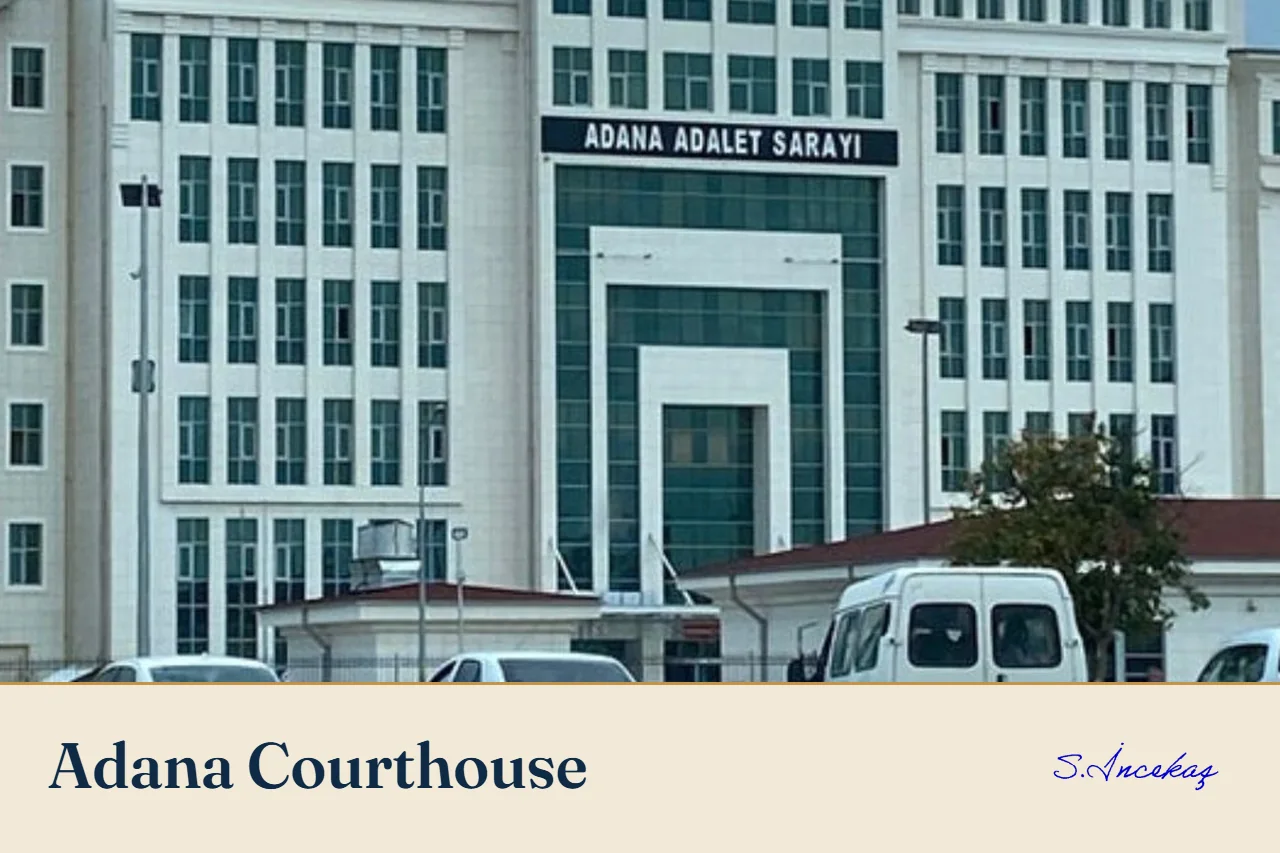
Do You Have to Hire a Criminal Lawyer in Turkey?
As a rule, no: you may defend yourself without hiring a private lawyer, but defense counsel is mandatory in certain cases. Because the outcome of a criminal case can directly affect your liberty, working with an experienced criminal lawyer is of great importance to the effectiveness of your defense, even where it is not mandatory.
When Is a Defense Lawyer Appointed Without a Request?
Under the Code of Criminal Procedure (CMK), a suspect or defendant without a lawyer receives bar-appointed defense counsel (CMK müdafii) even if they do not request one, in cases including the following:
- They are a child, cannot defend themselves because of a disability, or are deaf and unable to speak (CMK Article 150(2)).
- The investigation or trial concerns an offense with a statutory minimum prison sentence of more than five years (CMK Article 150(3)).
- Pretrial detention is requested (CMK Article 101(3)).
If you have your own defense lawyer, no additional defense counsel is appointed.
Which Defense Strategies Does a Criminal Lawyer Use?
A criminal lawyer uses defense strategies such as showing that the evidence is insufficient, excluding unlawfully obtained evidence, relying on self-defense, raising circumstances that exclude or reduce criminal responsibility, challenging intent or negligence, and using effective remorse and reconciliation.
A successful outcome largely depends on choosing the right defense strategy and applying it effectively, and professional criminal lawyers in Adana develop a defense strategy specific to each case, aiming to protect their clients’ rights to the fullest.
When Does Insufficient Evidence Lead to Acquittal?
The court must acquit if it is not proven that the defendant committed the offense (Code of Criminal Procedure (CMK) Article 223(2)(e)). Under the principle that doubt benefits the defendant (in dubio pro reo), a conviction requires proof of the offense that leaves no room for doubt and must rest on certain and clear proof, not on probability (Court of Cassation, Assembly of Criminal Chambers, decision of 8 April 2026, E.2025/486, K.2026/220).
An experienced criminal lawyer puts this principle at the center of the defense, showing that the evidence is insufficient or cannot overcome the doubt and exposing its gaps and contradictions.
When Is Unlawfully Obtained Evidence Excluded?
Evidence obtained in violation of the law is excluded: under Article 38(6) of the Constitution of the Republic of Turkey, such findings cannot be accepted as evidence, and the offense charged may be proved by any evidence obtained lawfully (CMK Article 217(2)). A conviction cannot be based on unlawfully obtained evidence (Court of Cassation, 7th Criminal Chamber, decision of 29 June 2026, E.2024/2798, K.2026/7707).
In this defense, criminal lawyers in Adana:
- Identify procedural violations in measures such as searches, seizures and the monitoring of communications.
- Identify measures carried out without the authorization required by law.
- Expose unlawful conduct during statements to the police or prosecutor and questioning by a judge.
- Ask for such evidence to be excluded and not used as the basis of the judgment.
When Does Self-Defense Remove Criminal Liability?
A person who acts to repel an attack on their own or another person’s rights is not punished if the conditions of self-defense are met (Turkish Penal Code (TCK), Article 25(1)). Where these conditions exist, criminal lawyers in Adana build the defense needed to remove their client’s criminal liability, and they:
- Show that the attack was unjust and was occurring or certain to occur or recur.
- Show that the defense was proportionate to the attack.
- Show that it was necessary to repel the attack at that moment.
- Support the self-defense argument with evidence that all required conditions were met.
What Circumstances Can Exclude Criminal Responsibility or Reduce Punishment?
Mental illness, qualifying temporary causes, necessity, duress and unjust provocation can exclude punishment or reduce the sentence where the statutory conditions are met, because they affect the offender’s culpability. Criminal lawyers include these circumstances in the defense:
- Mental illness: they argue that the statutory conditions for no punishment or a reduced sentence are met (TCK Article 32).
- Qualifying temporary cause: they argue that no punishment should be imposed (TCK Article 34).
- Necessity or duress: they argue that there is no culpability (TCK Articles 25(2) and 28).
- Unjust provocation: they ask for a reduced sentence (TCK Article 29).
How Can the Defense Challenge Allegations of Intent or Negligence?
The defense challenges these allegations by arguing that the mental element of the offense, intent or negligence, is missing (TCK Articles 21 and 22), which is another effective strategy. In this defense, a criminal lawyer:
- Argues that the client acted without intent to commit the offense.
- In offenses that the law punishes when committed through negligence, argues that there was no breach of the duty of care.
- Presents evidence supporting the argument that the result could not have been foreseen.
How Can Effective Remorse and Reconciliation Affect Your Case?
Depending on the offense, effective remorse can reduce or remove the penalty, and reconciliation can bring the case to an end; criminal lawyers often use these options as alternative routes. Effective remorse is regulated in various articles of the TCK, and reconciliation in CMK Article 253. An experienced criminal lawyer in Adana assesses the alternatives best suited to the client’s situation and:
- Examines whether the conditions for effective remorse are met.
- In offenses within the scope of reconciliation, lays the groundwork for an agreement with the victim.
- Considers options such as deferral of the public prosecution or deferral of the announcement of the verdict (HAGB).
What Happens When a Reconciliation Is Reached?
The result depends on how the agreed obligation is fulfilled (CMK Articles 253(19) and 254(2)):
- Fulfilled at once: the prosecutor decides not to prosecute during the investigation, and the court dismisses the case at trial.
- Later, in installments or continuing: the public prosecution is deferred during the investigation, and the trial is suspended.
- Terms not met: the public prosecution is brought or the trial resumes where it left off.
Which Offenses Cannot Be Settled Through Reconciliation?
Only offenses within the scope of reconciliation under CMK Article 253 can be settled, and even where prosecution depends on a complaint, reconciliation is not possible for offenses against sexual integrity, stalking or insult (CMK Article 253(3)).
Defense strategies cover a wide range, and in criminal cases working with an experienced lawyer who thinks strategically ensures that your legal rights are protected to the fullest.
What Problems Commonly Arise in Criminal Proceedings in Adana?
In practice, clients and lawyers in criminal cases in Adana may face problems such as lengthy proceedings, unlawful evidence gathering during the investigation, disproportionate use of pretrial detention and restricted access to a lawyer. Knowing these problems in advance and considering possible solutions helps the case proceed more smoothly.
What Can Be Done About Lengthy Proceedings?
To address lengthy proceedings, criminal lawyers:
- Object to unnecessary adjournments of hearings.
- Take an active role in speeding up the gathering of evidence.
Criminal lawyers also apply to the Turkish Compensation Commission (Tazminat Komisyonu) for non-pecuniary compensation, claiming a violation of the right to a trial within a reasonable time. The application can be made while the proceedings are ongoing or within one month of learning that they ended with a final decision (Law No. 6384, Articles 2(3)(a) and 5/A(1)).
An individual application to the Turkish Constitutional Court (Anayasa Mahkemesi) is considered only after this compensation route, including the objection against the Commission’s decision, has been exhausted (Law No. 6384, Article 7(4); Law No. 6216, Article 45(2)).
Long criminal proceedings leave both the defendant and the victim in uncertainty, weaken the evidence over time, damage the sense of justice and can amount to a violation of the right to a fair trial.
What If Evidence Was Gathered Unlawfully During the Investigation?
Your lawyer examines the lawfulness of the search and seizure measures and requests the exclusion of unlawfully obtained evidence. The exclusion rule is explained in “When Is Unlawfully Obtained Evidence Excluded?”
In our practice, we see unlawful conduct particularly in investigation measures such as searches, seizures and the monitoring of communications.
What If Pretrial Detention Is Disproportionate?
Your lawyer challenges disproportionate pretrial detention by showing in detail why it is out of proportion to the importance of the case and the expected penalty or security measure; under Article 100(1) of the Code of Criminal Procedure (CMK), detention may not be ordered in that case, and it also requires strong suspicion based on concrete evidence and a ground for detention.
Pretrial detention should be a last resort, yet in some cases it is applied as the first measure, which restricts personal liberty unnecessarily and undermines the presumption of innocence.
What If Your Access to a Lawyer Is Restricted?
If your access to a lawyer is restricted, your lawyer makes the applications needed to use the right to examine the case records effectively and, if the police took a statement from you without a lawyer present, challenges its use as the basis of a judgment. The rule on such statements is explained in “Can a Police Statement Taken Without a Lawyer Be Used Against You?”, and the legal limits on restricting meetings with a lawyer in “When Can Meetings With Your Lawyer in Police Custody Be Restricted?”
We must say plainly that during the investigation, especially when statements are taken and during questioning by a judge, defense lawyers face problems examining the case records, meeting their clients and communicating with the police.
Which Criminal Law Services Does Our Office Provide in Adana?
Our office specializes in criminal law in Adana and provides the following services:
- 24/7 emergency legal advice.
- Accompanying clients in police custody and during questioning by a judge.
- Effective defense against pretrial detention and judicial control measures.
- Comprehensive case review and development of a defense strategy.
- Representation at all hearings in cases before Criminal Courts of First Instance, juvenile courts and High Criminal Courts.
- For clients harmed by an offense, filing criminal complaints, applying on their behalf to join the public prosecution as intervening parties and representing them throughout the trial.
- Legal support in appeals to the regional court of appeal and the Court of Cassation.
- Legal support with procedures and applications during sentence enforcement.
- Taking the necessary steps to seek a reduced sentence and pursue alternative routes.
What Do People Frequently Ask a Criminal Lawyer in Adana?
Who Pays the Lawyer in a Criminal Case?
You pay the lawyer you choose, at the fee you agree on. If you declare that you cannot choose a defense counsel and ask for one, or where the law requires it, the bar association appoints one; the State pays their fee, but it is a litigation cost that a convicted defendant generally bears. If you are acquitted and were represented by a lawyer, a fixed attorney fee is awarded in your favor against the Turkish Treasury; this is not a refund of the fee you agreed with your lawyer.
How Long Do High Criminal Court Cases Take in Adana?
It varies with the nature of the offense, evidence gathering, witness and expert examinations, the court’s workload and appeals. For example, according to the Adana Justice Commission’s 2025 activity report, the average time to conclude cases recorded under the exact label “Kasten Öldürme” (intentional killing) ranged from 364 to 900 days across nine Adana High Criminal Courts. These are averages for individual courts at first instance; appeals are excluded.
Can You Claim Compensation After an Acquittal or a Decision Not to Prosecute?
Once the acquittal or decision not to prosecute is final, you may claim pecuniary and non-pecuniary damages from the State for arrest, pretrial detention or judicial control requiring you to stay at home or undergo treatment or examination for substance or alcohol addiction, even if the measure was lawful. Merely being tried is not a ground. Apply to the Turkish Compensation Commission within three months of being notified of finality and in any case within one year of finality.
Why Does an Experienced Criminal Lawyer in Adana Matter?
An experienced criminal lawyer in Adana protects your rights and builds the best defense in a case whose outcome directly affects your liberty, career and social standing. Criminal law is complex and demands technical knowledge and experience. Working with an expert criminal lawyer is vital to the proper conduct of proceedings and to establishing the truth sooner.
The law shows how fundamental the right to a defense is: if a suspect or defendant declares they cannot choose defense counsel, one is appointed at their request (Code of Criminal Procedure (CMK) Article 150(1)).
Getting professional help promptly is the first step to protecting your rights and receiving a fair trial.
Our experienced criminal lawyers in Adana are available 24/7. Contact us now or message us on WhatsApp to book an Initial Consultation, or use our online legal consultation service.
